
When launching a new app, SaaS, or indie project, builders often focus 100% of their energy on code, features, and database architecture. The name is frequently treated as an afterthought—a quick registration made at 2:00 AM after discovering that their first choice is parked.
However, cognitive science tells a different story. Your domain name is the very first interface your customer encounters. It forms their subconscious baseline for your brand's authority, security, and utility.
A poorly selected domain name acts as a silent tax on every marketing campaign, partnership, and word-of-mouth referral. Let's look at the cognitive science of domain psychology and how you can select a name that converts.
The Cognitive Science of Domain Names: Processing Fluency
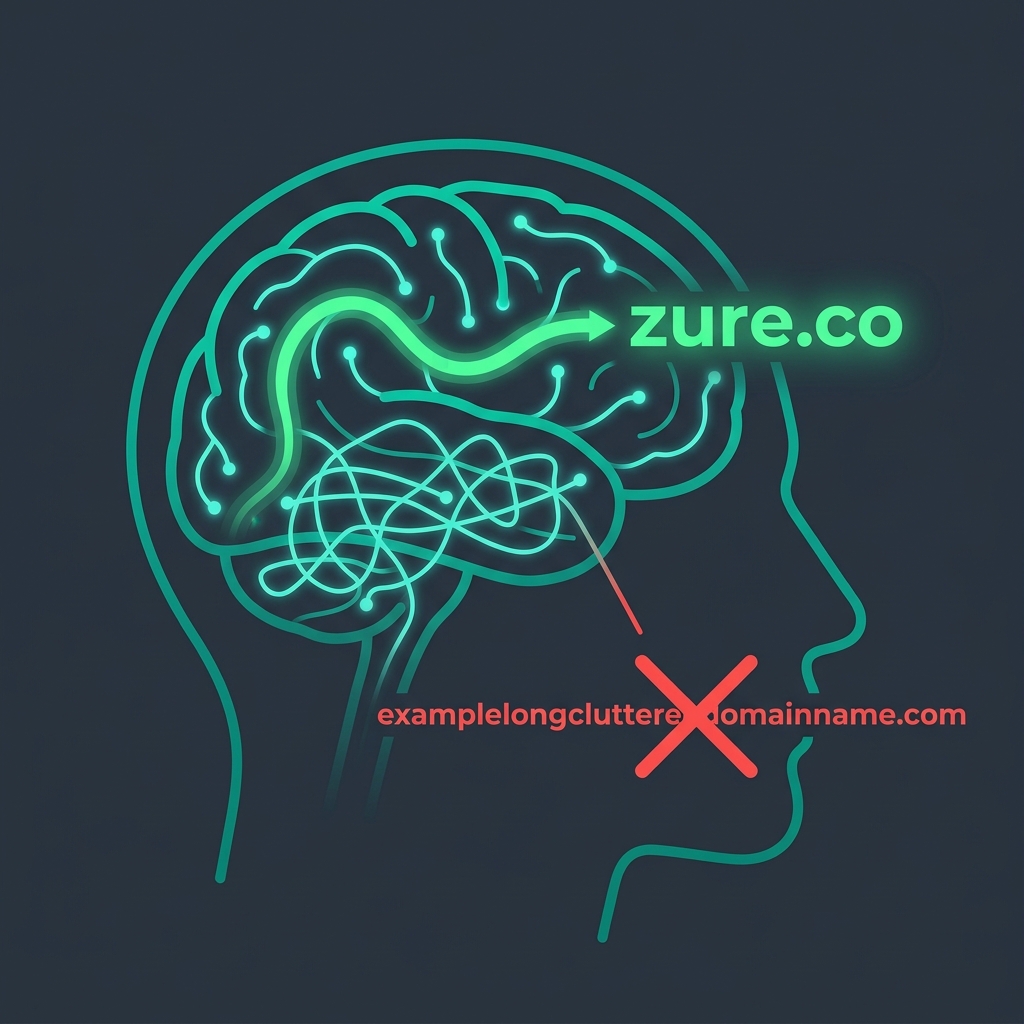
At the heart of naming psychology is a concept known as processing fluency—the ease with which the brain processes incoming information. In Daniel Kahneman’s groundbreaking work, Thinking, Fast and Slow, he details how cognitive ease directly correlates with feelings of trust, familiarity, and safety.
When a user encounters a domain name that is:
- Easy to pronounce (e.g., Luxuray)
- Short and simple to spell (e.g., Grubed)
- Free of hyphens or confusing numbers
Their brain experiences cognitive ease. In contrast, if a user has to read a domain multiple times to decipher the spelling (e.g., my-easy-pdf-converter-online-247.com), their brain experiences cognitive strain.
Academic branding studies, such as those published in the Journal of Consumer Research, demonstrate that consumers consistently rate high-fluency names as more trustworthy, higher quality, and less risky. When your domain is highly fluent, your customer's brain subconsciously assumes your product is similarly intuitive.
Phonetic Symbolism: How Sounds Shape Brand Perception
Sound symbolism, or phonetic symbolism, is the study of how vocal sounds convey subconscious meaning independently of a word's definition. Research shows that specific letters trigger emotional associations:
Plosives (Sharpness and Precision)
Consonants like b, d, g, p, t, k are called plosives because they require the mouth to stop air flow and release it sharply. In domain naming, plosives denote speed, sharpness, and high performance. Domains like pdfbyte.com, debug.bot, and routers.app leverage plosives to communicate technical capability and execution.
Sibilants (Modernity and Fluidity)
Fricative consonants like s, z create a hissing sound. They are associated with smoothness, speed, and luxury. A domain like zure.co or senaps.com sounds sleek, lightweight, and modern. These phonetic profiles are ideal for clean API architectures, design-focused dev tools, and premium SaaS layers.
By selecting a name with the right sound profile, you prime your audience's expectations before they even read your landing page.
The Chunking Rule: How Short Names Fit Working Memory
Cognitive psychology highlights a hard limit on human working memory, often described by Miller's Law (the magical number seven, plus or minus two). Modern studies in cognitive load theory have refined this number, suggesting that our active working memory holds only about four distinct chunks of information at once.
This is why short domain names are vastly superior to long, descriptive ones. A domain like nard.app, sacs.app, or zure.co occupies a single, low-effort slot in a user’s working memory. It is retrieved instantly when they want to search for your app.
Conversely, a long domain like best-subscription-reseller-dashboard.com forces the user's brain to parse five separate words, exceeding their cognitive capacity and leading to rapid memory decay.
TLD Bias: The Psychological Safety of .Com, .Co, and .Ai
Not all domain extensions carry the same psychological weight. A user's mental model of the internet dictates how they trust different top-level domains (TLDs). Here is a look at how users evaluate modern TLDs:
The Gold Standard: .Com
The .com extension remains the default domain space in the user's subconscious mind. According to studies on internet search behavior, when a user cannot remember an extension, their brain defaults to typing .com. Having a .com domain (e.g., coldlists.com, deskgamer.com, luxuray.com) creates an immediate aura of stability and longevity.
The Developer Standard: .Co and .Io
For tech-savvy users, developers, and vibe coders, .co and .io have achieved strong psychological validation. Originally country code TLDs, they are now viewed as the global standard for modern SaaS and developer tooling. They communicate that a company is agile, modern, and built by technical founders (e.g., zure.co, finals.io, lessonplan.io).
The Innovation Standard: .Ai
In 2026, .ai has transcended artificial intelligence. It acts as a psychological badge of innovation. Choosing a .ai extension (e.g., braced.ai, sellerdesk.ai) signals to investors, builders, and early adopters that your product sits at the cutting edge of modern software engineering.
Semantic Priming: The Power of Compound Morphemes
Another core concept in naming psychology is semantic priming—how exposure to one word influences a person’s response to a subsequent, related word.
By combining two clean, descriptive morphemes (words), you can explain what your startup does without creating boring descriptive domains. For example:
- sellerdesk.ai: "Seller" primes the brain to think of e-commerce, and "Desk" suggests a workspace.
- lessonplan.io: "Lesson" and "Plan" immediately signal education technology.
- mvptennis.com: "MVP" and "Tennis" trigger association with premium athletic apps or booking tools.
- tirequick.com: "Tire" and "Quick" suggest rapid automotive services.
These combinations are highly memorable because the brain stores them as pre-existing semantic associations rather than brand new, arbitrary words.
The Hidden Cost of Friction: Word-of-Mouth Marketing
Word-of-mouth is the most powerful growth channel for startups and indie projects. However, word-of-mouth relies entirely on auditory recall.
Imagine a user listening to a podcast or speaking to a colleague at a developer conference:
- High Fluency: "Hey, check out Finals." The listener immediately knows how to type it. They find finals.io without friction.
- Low Friction: "Hey, check out Resellers." They find resellers.app instantly.
- Low Fluency: "Hey, check out MVP-Tennis-Online with a hyphen." The listener forgets the hyphen, types it wrong, lands on a parked domain page, and abandons the search.
According to branding studies, difficult spelling increases the interaction friction of your website. If your domain name requires you to verbally explain how to spell it (e.g., "it's Vibe but with a Y"), your word-of-mouth marketing is fundamentally broken.
Comparison: High-Fluency vs. Low-Fluency Domains
| Naming Metric | Premium Brandable Domains (e.g., 199.domains) | Long/Hyphenated Handouts |
|---|---|---|
| Cognitive Load | Low (instant recall, intuitive spelling) | High (confusing word combinations, numbers) |
| Word-of-Mouth Recall | Direct and frictionless | Prone to spelling and retrieval errors |
| Brand Authority | Signals quality product and stability | Suggests low-budget or amateur setup |
| Ad Click-Through Rate | Higher (clean URLs build trust in search results) | Lower (looks like spam or affiliate sites) |
Cognitive Load in Domain Acquisition: Flat Rate vs. Broker Bidding
The psychology of naming doesn't just impact your customers; it impacts you as a founder.
Traditional domain brokers leverage psychological triggers—such as scarcity and artificial authority—to inflate pricing. Opaque "Make an Offer" landing pages trigger loss aversion and anxiety. Founders are forced to either enter bidding wars they cannot afford or spend weeks in broker negotiations, losing valuable momentum.
At 199.domains, we have re-engineered this process. By presenting curated, premium brandable names for a flat price of just $199, we eliminate decision anxiety. You see a name, you purchase it instantly via Stripe, and you own it in under 72 hours. This transparency allows you to maintain your builder flow state and launch your product immediately.
Explore our Recently Added Domains or search our handpicked Featured Picks to find a high-fluency brand name for your next launch.